
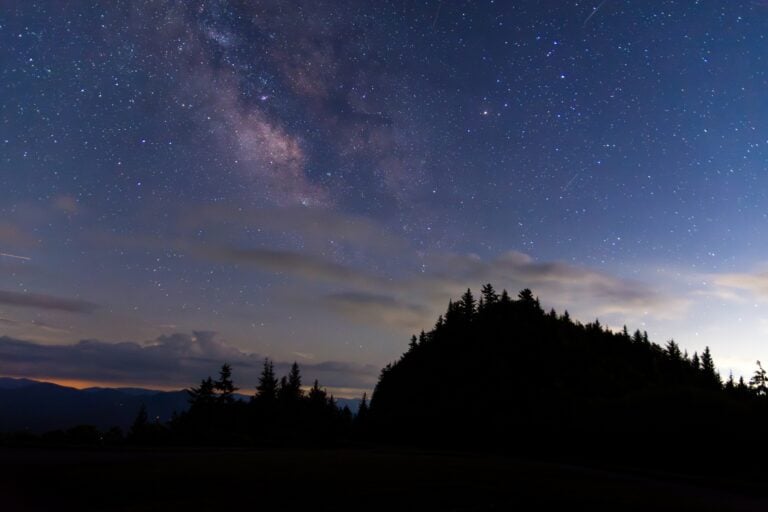

In the Western North Carolina mountain towns of Cashiers, Cherokee, Dillsboro and Sylva, the night sky puts on a show unlike anything you’ll find near a city. Surrounded by ridgelines and free of light pollution, this corner of the Appalachians is one of the best places in the eastern United States to see the stars.
Pack your telescope, lace up your hiking boots and get ready for an out-of-this-world experience under some of the darkest skies on the East Coast. Here are the top five spots for stargazing in North Carolina.
1. Black Balsam Knob
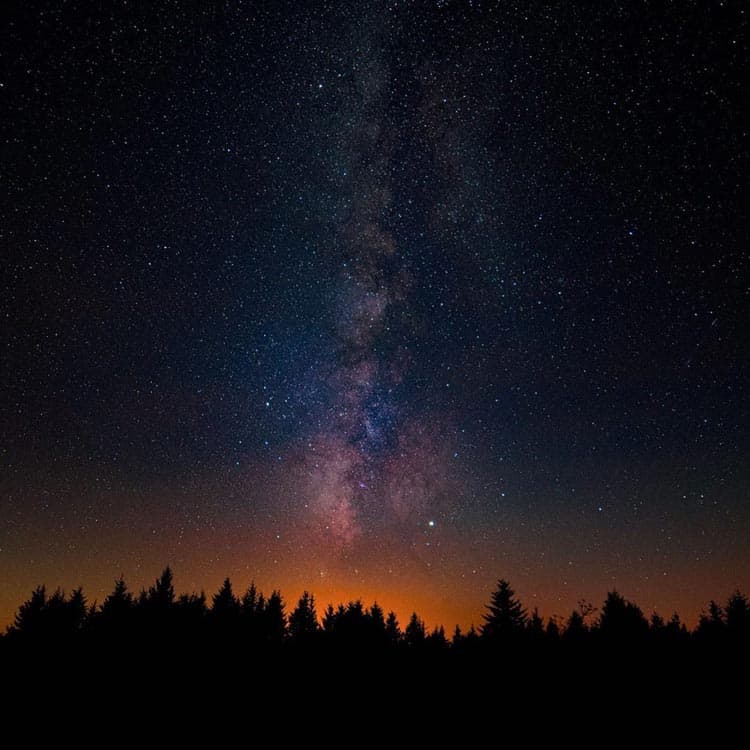
One of the greatest hikes along the Blue Ridge Parkway, Black Balsam Trail scales Black Balsam Knob, the 23rd-highest mountain in North Carolina.
Once you reach 6,000 feet, the mountaintops are almost completely void of trees, making for incredible views and invigorating hikes.
2. Waterrock Knob
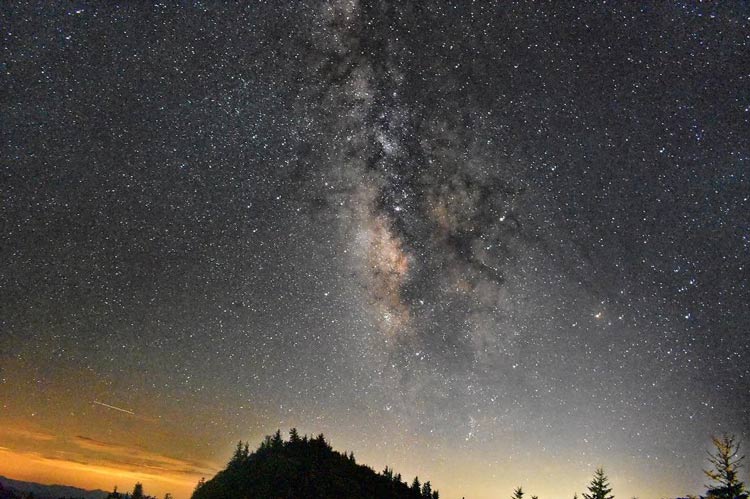
For a steep hike with great views along the way, Waterrock Knob Trail will literally take your breath away.
A 1.2-mile round-trip hike will take you to the top of the 6,292-foot summit. The vigorous climb gains 412 feet in elevation and features great views along the way.
At the top, there are several vantage points where you can see up to 50 miles out on a clear day to the Smokies.
3. Whiteside Mountain
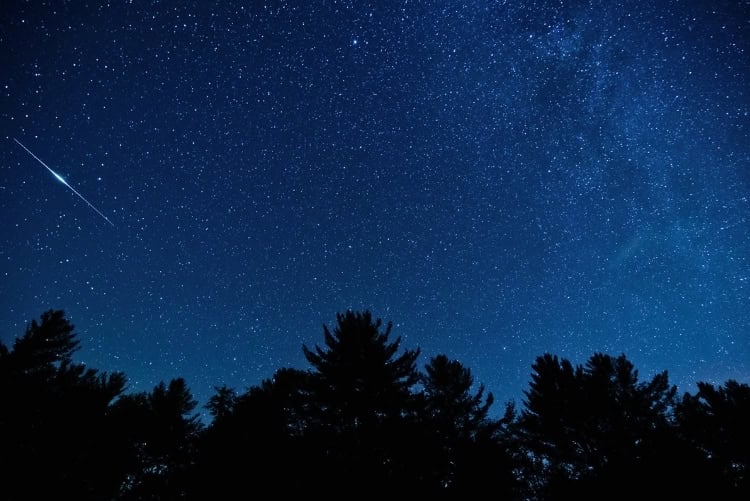
With sheer, vertical cliffs that tower above the valley below, this trail features one of the county’s most recognizable peaks.
Due to erosion, Whiteside Mountain now boasts some of the highest vertical cliffs in eastern North America, with sheer drops of up to 750 feet. Whiteside’s 4,930-foot crest can be attained by a loop trail that offers panoramic views of the sky in its most perfect form—great for stargazing.
You may glimpse a peregrine falcon soaring overhead or perched on Whiteside’s rocky outcrops during spring or summer visits, but the cliff face is closed to rappelling and climbing during nesting season.
Read More: 7 US Summer Camping Spots to Visit This Year
4. Pinnacle Park Trail
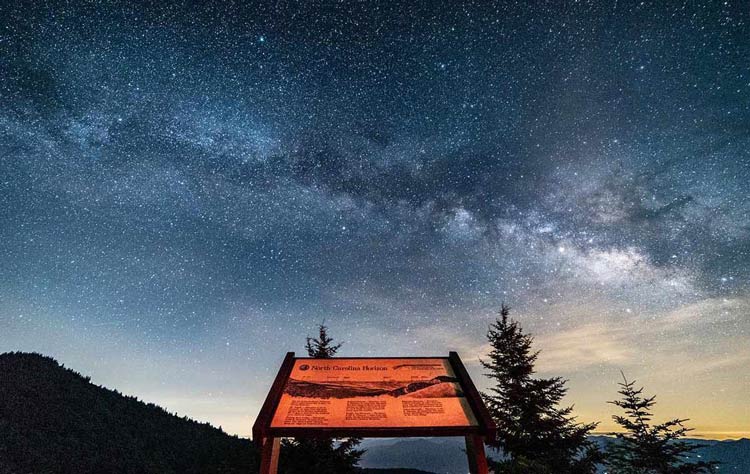
See if you have what it takes and hike the strenuous terrain of Pinnacle Park, a 7-mile trek that ascends more than 3,000 ft. in elevation.
Your reward? Incredible views of the mountains below and the stars above. Be sure to pack a late-night snack and camera before embarking on this hiking and stargazing adventure.
The 1,000-acre town park features streams, waterfalls and panoramic views throughout. The 3.4-mile trail to the top follows an old logging road for most of its length, through a grassy ridge and then up a short rocky trail to the Pinnacle, where panoramic views of Sylva and Scotts Creek Valley await.
5. Richland Balsam Trail
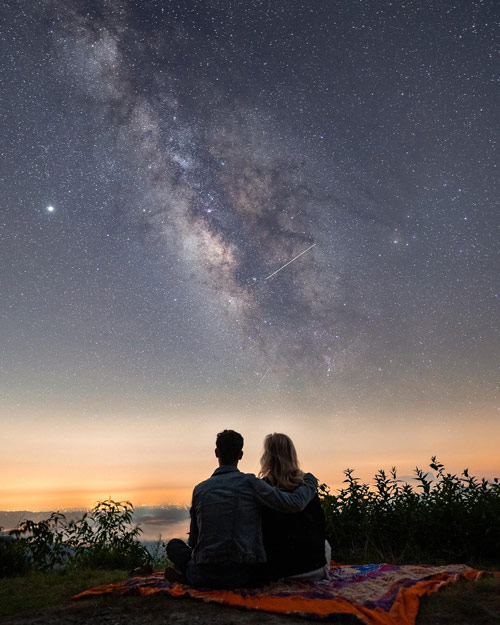
Known as the best-smelling trail on the Blue Ridge Parkway, this 1.5-mile loop winds through a spruce-fir forest.
You’ll love this surprisingly easy hike to the highest peak along the Blue Ridge Parkway – talk about skyline views.
Even though the climb is about 700 vertical feet, the Richard Balsam Trail is not overly strenuous, and the cooler temps make for a refreshing hike during hot summer months.
When hiking to view the beautiful night skies, guests are recommended to either pack gear to stay the night or bring flashlights and take care while climbing down since you only have the natural moon and starlight to guide you.
If You Go
Getting There: Book flights into Asheville Regional Airport (AVL), the closest major airport to Western North Carolina’s mountain region. Search flights on CheapOair.
Getting Around: A rental car is essential for reaching these trailheads, most of which sit along or just off the Blue Ridge Parkway. Book a car through Discover Cars.
Where to Stay: The towns of Cashiers, Sylva and Cherokee offer lodging close to all five trailheads. Browse hotels on TripAdvisor.
Stargazing Tips:
- Most of these hikes are best done at night or just after dark. Pack a headlamp, extra layers and a charged phone as cell reception is limited at elevation.
- Bring a red-light flashlight to preserve your night vision while navigating trails.
- Check moon phase calendars before you go; new moon nights offer the darkest skies and best viewing.
Need a hand planning your trip? Here are the sites and services we rely on most, from booking tools to travel products we love.
Inspire your next adventure with our articles below:
- Why Bird Lovers Are Flocking to This Peaceful Maryland Lake Hotel
- Experience Jurassic Nature in Technicolor on the Azores’ São Miguel Island
Want to discover more hidden gems and helpful travel tips? Join our free newsletter for the latest travel secrets and travel articles.
We are reader-supported and may earn a commission on purchases made through links in this article.

- Bonaire, Savored Slow: Cactus Liqueur, Caviar, Donkeys and Shore Diving - October 23, 2026
- Two Colorado Hot Springs Worth the Drive from Denver - October 23, 2026
- Is 55 Too Young for a River Cruise in Europe? - October 23, 2026
Planning another trip soon? ✈️
Add GoWorldTravel.com as a preferred source on Google. Click the button below so our local guides, packing hacks, and hidden-gem itineraries always show up first when you search!
Add to Preferred Sources